Qin the Warring States the Art of War Pdf Download
| Sun Tzu | |||||||||||||||||||||||||||||||||||||||||||||
|---|---|---|---|---|---|---|---|---|---|---|---|---|---|---|---|---|---|---|---|---|---|---|---|---|---|---|---|---|---|---|---|---|---|---|---|---|---|---|---|---|---|---|---|---|---|
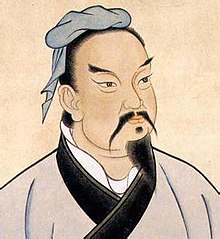 | |||||||||||||||||||||||||||||||||||||||||||||
| Native proper noun | 孫子 | ||||||||||||||||||||||||||||||||||||||||||||
| Born | Sunday Wu 544 BC (traditional) Qi or Wu, Zhou Kingdom | ||||||||||||||||||||||||||||||||||||||||||||
| Died | 496 BC (traditional; aged 47–48) Gusu, Wu, Zhou Kingdom | ||||||||||||||||||||||||||||||||||||||||||||
| Pen name | Lord's day Tzu | ||||||||||||||||||||||||||||||||||||||||||||
| Occupation | Military full general, tactician, writer, philosopher | ||||||||||||||||||||||||||||||||||||||||||||
| Language | Chinese | ||||||||||||||||||||||||||||||||||||||||||||
| Period | Spring and autumn | ||||||||||||||||||||||||||||||||||||||||||||
| Field of study | Armed services strategy | ||||||||||||||||||||||||||||||||||||||||||||
| Notable works | The Fine art of State of war | ||||||||||||||||||||||||||||||||||||||||||||
| Chinese name | |||||||||||||||||||||||||||||||||||||||||||||
| Traditional Chinese | 孫子 | ||||||||||||||||||||||||||||||||||||||||||||
| Simplified Chinese | 孙子 | ||||||||||||||||||||||||||||||||||||||||||||
| Wade–Giles | Sun¹ Tzŭ³ | ||||||||||||||||||||||||||||||||||||||||||||
| Hanyu Pinyin | Sūnzǐ | ||||||||||||||||||||||||||||||||||||||||||||
| Literal meaning | "Master Sun" | ||||||||||||||||||||||||||||||||||||||||||||
| |||||||||||||||||||||||||||||||||||||||||||||
| Sun Wu | |||||||||||||||||||||||||||||||||||||||||||||
| Traditional Chinese | 孫武 | ||||||||||||||||||||||||||||||||||||||||||||
| Simplified Chinese | 孙武 | ||||||||||||||||||||||||||||||||||||||||||||
| Wade–Giles | Sun¹ Wu³ | ||||||||||||||||||||||||||||||||||||||||||||
| Hanyu Pinyin | Sūn Wǔ | ||||||||||||||||||||||||||||||||||||||||||||
| |||||||||||||||||||||||||||||||||||||||||||||
| Changqing | |||||||||||||||||||||||||||||||||||||||||||||
| Traditional Chinese | 長卿 | ||||||||||||||||||||||||||||||||||||||||||||
| Simplified Chinese | 长卿 | ||||||||||||||||||||||||||||||||||||||||||||
| Wade–Giles | Ch'ang²-chʻing¹ | ||||||||||||||||||||||||||||||||||||||||||||
| Hanyu Pinyin | Chángqīng | ||||||||||||||||||||||||||||||||||||||||||||
| |||||||||||||||||||||||||||||||||||||||||||||
| Vietnamese name | |||||||||||||||||||||||||||||||||||||||||||||
| Vietnamese | Tôn Vũ Tôn Tử | ||||||||||||||||||||||||||||||||||||||||||||
| Hán-Nôm | 孫武 孫子 | ||||||||||||||||||||||||||||||||||||||||||||
| Korean name | |||||||||||||||||||||||||||||||||||||||||||||
| Hangul | 손무 손자 | ||||||||||||||||||||||||||||||||||||||||||||
| Hanja | 孫武 孫子 | ||||||||||||||||||||||||||||||||||||||||||||
| |||||||||||||||||||||||||||||||||||||||||||||
| Japanese name | |||||||||||||||||||||||||||||||||||||||||||||
| Kanji | 孫武 孫子 | ||||||||||||||||||||||||||||||||||||||||||||
| Hiragana | そんぶ そんし | ||||||||||||||||||||||||||||||||||||||||||||
| |||||||||||||||||||||||||||||||||||||||||||||
Lord's day Tzu ( shortly DZOO, soon SOO ;[1] [2] simplified Chinese: 孙子; traditional Chinese: 孫子; pinyin: Sūnzǐ ) was a Chinese general, military strategist, writer, and philosopher who lived in the Eastern Zhou period of aboriginal China. Sun Tzu is traditionally credited as the author of The Art of War, an influential piece of work of war machine strategy that has affected both Western and East Asian philosophy and military machine thinking. His works focus much more on alternatives to battle, such every bit stratagem, delay, the use of spies and alternatives to state of war itself, the making and keeping of alliances, the uses of deceit, and a willingness to submit, at to the lowest degree temporarily, to more powerful foes.[three] Sun Tzu is revered in Chinese and East Asian culture as a legendary historical and military figure. His birth proper noun was Sun Wu (simplified Chinese: 孙武; traditional Chinese: 孫武) and he was known outside of his family by his courtesy proper name Changqing (Chinese: 長卿).[ citation needed ] The name Sun Tzu by which he is more popularly known is an honorific which means "Principal Sunday".
Lord's day Tzu'due south historicity is uncertain. The Han dynasty historian Sima Qian and other traditional Chinese historians placed him as a minister to Male monarch Helü of Wu and dated his lifetime to 544–496 BC. Modern scholars accepting his historicity place the extant text of The Art of War in the later Warring States period based on its style of limerick and its descriptions of warfare.[4] Traditional accounts state that the general'south descendant Dominicus Bin wrote a treatise on military tactics, besides titled The Art of War. Since Sun Wu and Lord's day Bin were referred to as Lord's day Tzu in classical Chinese texts, some historians believed them identical, prior to the rediscovery of Dominicus Bin'southward treatise in 1972.
Dominicus Tzu's work has been praised and employed in East Asian warfare since its composition. During the twentieth century, The Fine art of War grew in popularity and saw applied utilize in Western society too. It continues to influence many competitive endeavors in the world, including culture, politics, business organisation and sports, as well every bit mod warfare.[5] [half-dozen] [7] [8]
Life [edit]
The oldest available sources disagree equally to where Sun Tzu was born. The Spring and Autumn Annals and Sima Qian'southward later Records of the Grand Historian (Shiji) state that Sun Tzu was born in Qi.[9] Both sources also agree that Sun Tzu was born in the late Spring and Fall period and that he was agile as a full general and strategist, serving King Helü of Wu in the late 6th century BC, offset effectually 512 BC. Sun Tzu's victories so inspired him to write The Fine art of War. The Art of State of war was one of the near widely read military treatises in the subsequent Warring States period, a time of constant war among seven aboriginal Chinese states–Zhao, Qi, Qin, Chu, Han, Wei, and Yan–who fought to command the vast expanse of fertile territory in Eastern China.[10]
One of the meliorate-known stories about Sun Tzu, taken from Sima Qian, illustrates Sunday Tzu's temperament as follows: Before hiring Lord's day Tzu, the King of Wu tested Sun Tzu's skills by commanding him to train a harem of 180 concubines into soldiers. Dominicus Tzu divided them into ii companies, appointing the two concubines most favored by the male monarch every bit the company commanders. When Sun Tzu starting time ordered the concubines to face correct, they giggled. In response, Sun Tzu said that the general, in this example himself, was responsible for ensuring that soldiers understood the commands given to them. And then, he reiterated the command, and again the concubines giggled. Sun Tzu then ordered the execution of the king's two favored concubines, to the rex's protests. He explained that if the general's soldiers understood their commands but did not obey, it was the mistake of the officers. Dominicus Tzu also said that, once a general was appointed, it was his duty to bear out his mission, even if the king protested. After both concubines were killed, new officers were chosen to supplant them. Later on, both companies, now well enlightened of the costs of farther frivolity, performed their maneuvers flawlessly.[11]
Sima Qian claimed that Sun Tzu later on proved on the battlefield that his theories were constructive (for case, at the Battle of Boju), that he had a successful war machine career, and that he wrote The Art of War based on his tested expertise.[xi] Nonetheless, the Zuozhuan, a historical text written centuries before than the Shiji, provides a much more detailed account of the Battle of Boju, only does not mention Sunday Tzu at all.[12]
Historicity [edit]
Around the 12th century AD, some Chinese scholars began to doubt the historical existence of Sun Tzu, primarily on the grounds that he is not mentioned in the historical archetype Zuo zhuan, which mentions most of the notable figures from the Spring and Fall period.[13] The name "Sun Wu" ( 孫武 ) does non appear in any text prior to the Records of the Grand Historian,[14] and may accept been a fabricated-up descriptive cognomen pregnant "the fugitive warrior"—the surname "Dominicus" can be glossed equally the related term "fugitive" (xùn 遜 ), while "Wu" is the aboriginal Chinese virtue of "martial, valiant" (wǔ 武 ), which corresponds to Sun Tzu'southward role as the hero's doppelgänger in the story of Wu Zixu.[15] The only historical battle attributed to Sun Tzu, the Battle of Boju, has no record of him fighting in that battle.[xvi]

Skeptics cite possible historical inaccuracies and anachronisms in the text, and that the book was actually a compilation from different authors and military strategists. Attribution of the authorship of The Fine art of State of war varies amidst scholars and has included people and movements including Sun; Chu scholar Wu Zixu; an anonymous author; a school of theorists in Qi or Wu; Dominicus Bin; and others.[17] Dominicus Bin appears to take been an actual person who was a genuine authority on war machine matters, and may have been the inspiration for the cosmos of the historical effigy "Dominicus Tzu" through a form of euhemerism.[15] The name Sunday Wu does appear in after sources such as the Shiji and the Wu Yue Chunqiu, but were written centuries afterward Sun Tzu'south era.[18]
The utilise of the strips in other works withal, such as The Methods of the Sima is considered proof of Sun Tzu'south historical priority.[19] According to Ralph Sawyer, it is very probable Sun Tzu did exist and non only served as a full general but also wrote the core of the book that bears his proper noun.[20] It is argued that in that location is a disparity between the big-scale wars and sophisticated techniques detailed in the text and the more archaic modest-calibration battles that many believe predominated in Cathay during the 6th century BC. Against this, Sawyer argues that the teachings of Sun Wu were probably taught to succeeding generations in his family or a small school of disciples, which eventually included Dominicus Bin. These descendants or students may have revised or expanded upon certain points in the original text.[20]
Skeptics who identify problems with the traditionalist view point to possible anachronisms in The Fine art of War including terms, engineering science (such as anachronistic crossbows and the unmentioned cavalry), philosophical ideas, events, and armed forces techniques that should not have been available to Sun Wu.[21] [22] Additionally, there are no records of professional generals during the Spring and Autumn period; these are only extant from the Warring States menstruation, so there is uncertainty as to Sunday Tzu'southward rank and generalship.[22] This caused much confusion as to when The Art of War was really written. The starting time traditional view is that it was written in 512 BC by the historical Sun Wu, active in the last years of the Leap and Autumn flow (c. 722–481 BC). A second view, held past scholars such as Samuel Griffith, places The Art of War during the centre to late Warring States period (c. 481–221 BC). Finally, a 3rd school claims that the slips were published in the last half of the 5th century BC; this is based on how its adherents interpret the bamboo slips discovered at Yinque Shan in 1972 Advert.[23]
The Art of War [edit]

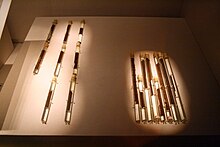
A copy of The Fine art of War written on bamboo
The Fine art of War is traditionally ascribed to Lord's day Tzu. Information technology presents a philosophy of war for managing conflicts and winning battles. Information technology is accepted as a masterpiece on strategy and has been oftentimes cited and referred to by generals and theorists since it was get-go published, translated, and distributed internationally.[24]
There are numerous theories apropos when the text was completed and apropos the identity of the author or authors, but archeological recoveries show The Art of War had taken roughly its current form past at least the early Han period.[25] Because information technology is impossible to show definitively when the Art of State of war was completed before this date, the differing theories apropos the piece of work's author or authors and appointment of completion are unlikely to be completely resolved.[26] Some modern scholars believe that it contains not only the thoughts of its original author but also commentary and clarifications from afterward military theorists, such as Li Quan and Du Mu.
Of the military texts written before the unification of Communist china and Shi Huangdi's subsequent book burning in the second century BC, six major works have survived. During the much later Song dynasty, these six works were combined with a Tang text into a drove called the Seven Military Classics. As a central role of that compilation, The Art of State of war formed the foundations of orthodox armed forces theory in early mod China. Illustrating this point, the book was required reading to pass the tests for regal appointment to armed services positions.[27]
Sun Tzu'south The Fine art of War uses language that may be unusual in a Western text on warfare and strategy.[28] For example, the eleventh affiliate states that a leader must be "serene and inscrutable" and capable of comprehending "unfathomable plans". The text contains many similar remarks that accept long confused Western readers defective an awareness of the East Asian context. The meanings of such statements are clearer when interpreted in the context of Taoist thought and practice. Sun Tzu viewed the platonic general as an enlightened Taoist master, which has led to The Art of War beingness considered a prime instance of Taoist strategy.[ commendation needed ]
The book has also get popular among political leaders and those in business organisation management. Despite its championship, The Art of War addresses strategy in a broad fashion, touching upon public administration and planning. The text outlines theories of battle, but also advocates diplomacy and the cultivation of relationships with other nations as essential to the health of a land.[24]
On 10 April 1972, the Yinqueshan Han Tombs were accidentally unearthed by construction workers in Shandong.[29] [30] Scholars uncovered a collection of aboriginal texts written on unusually well-preserved bamboo slips. Among them were The Art of War and Sunday Bin's Military Methods.[30] Although Han dynasty bibliographies noted the latter publication every bit extant and written past a descendant of Sun, it had previously been lost. The rediscovery of Dominicus Bin'southward work is regarded as extremely important by scholars, both because of Sun Bin'southward relationship to Sun Tzu and considering of the work's addition to the body of armed forces thought in Chinese late antiquity.[31] The discovery as a whole significantly expanded the body of surviving Warring States war machine theory. Sun Bin's treatise is the only known military text surviving from the Warring States period discovered in the twentieth century and bears the closest similarity to The Art of War of all surviving texts.
Legacy [edit]
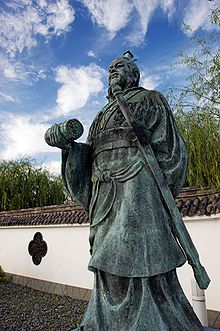
Dominicus Tzu's Art of War has influenced many notable figures. The Chinese historian Sima Qian recounted that China'due south first historical emperor, Qin'due south Shi Huangdi, considered the volume invaluable in catastrophe the time of the Warring States. In the 20th century, the Chinese Communist leader Mao Zedong partially credited his 1949 victory over Chiang Kai-shek and the Kuomintang to The Art of War. The piece of work strongly influenced Mao's writings about guerrilla warfare, which further influenced communist insurgencies around the world.[32]
The Art of State of war was introduced into Japan c. AD 760 and the book quickly became popular among Japanese generals. Through its later influence on the Sengoku period "Neat Unifiers" of Nippon, Oda Nobunaga, Toyotomi Hideyoshi, and Tokugawa Ieyasu,[32] information technology significantly affected the unification of Japan in the early mod era. The mastery of its teachings was honored among the samurai and its teachings were both exhorted and exemplified by influential daimyōs and shōguns. Later the Meiji Restoration, it remained popular among the Royal Japanese armed forces. The Admiral of the Fleet Tōgō Heihachirō, who led Nippon's forces to victory in the Russo-Japanese War, was an avid reader of Dominicus Tzu.[33]
Ho Chi Minh translated the work for his Vietnamese officers to study. His general Võ Nguyên Giáp, the strategist behind victories over French and American forces in Vietnam, was likewise an avid student and practitioner of Sun Tzu's ideas.[34] [35] [36]
America'southward Asian conflicts confronting Japan, Northward Korea, and N Vietnam brought Sun Tzu to the attending of American military leaders. The Section of the Army in the United states, through its Command and Full general Staff College, has directed all units to maintain libraries inside their corresponding headquarters for the continuing educational activity of personnel in the art of war. The Art of War is mentioned as an example of works to be maintained at each facility, and staff duty officers are obliged to prepare short papers for presentation to other officers on their readings.[37] Similarly, Sun Tzu's Art of War is listed on the Marine Corps Professional Reading Programme.[38] During the Gulf War in the 1990s, both Generals Norman Schwarzkopf Jr. and Colin Powell employed principles from Sunday Tzu related to deception, speed, and hit one's enemy's weak points.[32] Withal, the Usa and other Western countries take been criticised for not truly understanding Sun Tzu'south piece of work and not appreciating The Fine art of War within the wider context of Chinese society.[39]
In the 1987 film Wall Street, the protagonist Gordon Gekko oftentimes cites passages from The Fine art of State of war every bit guiding principles for his aggressive trading techniques.[40]
Daoist rhetoric is a component incorporated in the Art of War. According to Steven C. Combs in "Sun-zi and the Fine art of War: The Rhetoric of Parsimony",[41] warfare is "used as a metaphor for rhetoric, and that both are philosophically based arts."[41] Combs writes: "Warfare is analogous to persuasion, every bit a boxing for hearts and minds."[41] The application of The Art of War strategies throughout history is attributed to its philosophical rhetoric. Daoism is the fundamental principle in the Art of War. Combs compares ancient Daoist Chinese to traditional Aristotelian rhetoric, notably for the differences in persuasion. Daoist rhetoric in The Art of War warfare strategies is described every bit "peaceful and passive, favoring silence over speech".[41] This form of communication is parsimonious. Parsimonious beliefs, which is highly emphasized in The Art of War as avoiding confrontation and being spiritual in nature, shapes basic principles in Daoism.[42]
Mark McNeilly writes in Lord's day Tzu and the Art of Modern Warfare that a modern interpretation of Sun and his importance throughout Chinese history is critical in understanding China's push to becoming a superpower in the 20-first century. Mod Chinese scholars explicitly rely on historical strategic lessons and The Fine art of War in developing their theories, seeing a direct relationship betwixt their modern struggles and those of Red china in Sunday Tzu's fourth dimension. At that place is a great perceived value in Sun Tzu's teachings and other traditional Chinese writers, which are used regularly in developing the strategies of the Chinese land and its leaders.[43]
In 2008, the Chinese idiot box producer Zhang Jizhong adapted Sun Tzu'southward life story into a 40-episode historical drama telly serial entitled Bing Sheng, starring Zhu Yawen equally Sun Tzu.[44]
The video game Historic period of Empires II: Definitive Edition contains claiming missions based on Sun Tzu's The Art of War, which explains the military tactics and strategies.[45]
See also [edit]
- Sunday Bin
- The Fine art of War
References [edit]
Citations [edit]
- ^ "Sun Tzu". Columbia Electronic Encyclopedia (2013).
- ^ "Lord's day Tzu". The American Heritage Lexicon of the English (5th ed.). HarperCollins. Retrieved 25 October 2019.
- ^ Aboriginal warfare edited by John Carman and Anthony Harding, folio 41
- ^ Sawyer 2007, pp. 421–422.
- ^ Scott, Wilson (seven March 2013), "Obama meets privately with Jewish leaders", The Washington Post, Washington, D.C., archived from the original on 24 July 2013, retrieved 22 May 2013
- ^ "Obama to challenge Israelis on peace", United Press International, 8 March 2013, retrieved 22 May 2013
- ^ Garner, Rochelle (16 Oct 2006), "Oracle's Ellison Uses 'Fine art of War' in Software Battle With SAP", Bloomberg, archived from the original on 20 Oct 2015, retrieved 18 May 2013
- ^ Hack, Damon (3 February 2005), "For Patriots' Coach, State of war Is Decided Before Game", The New York Times , retrieved 18 May 2013
- ^ Sawyer 2007, p. 151.
- ^ McNeilly 2001, pp. 3–4.
- ^ a b Bradford 2000, pp. 134–35.
- ^ Zuo Qiuming, "Duke Ding", Zuo Zhuan (in Chinese and English), vol. XI
- ^ Gawlikowski & Loewe (1993), p. 447.
- ^ Mair (2007), p. nine.
- ^ a b Mair, Victor H. (2007). The Art of State of war: Lord's day Zi's Military Methods. New York: Columbia University Press. pp. 9–10. ISBN 978-0-231-13382-one.
- ^ Worthington, Daryl (13 March 2015). "The Art of War". New Historian. Archived from the original on three March 2019. 13 March 2015
- ^ Sawyer 2005, pp. 34–35.
- ^ Sawyer 2007, pp. 176–77.
- ^ Sawyer 1994, pp. 149–50.
- ^ a b Sawyer 2007, pp. 150–51.
- ^ Yang, Sang. The Art of State of war. Wordsworth Editions Ltd (v December 1999). pp. 14–15. ISBN 978-1853267796
- ^ a b Szczepanski, Kallie. "Sun Tzu and the Art of State of war". Asian History. 4 Feb 2015
- ^ Morrow, Nicholas (4 February 2015). "Lord's day Tzu, The Art of State of war (c. 500–300 B.C.)". Classics of Strategy. Archived from the original on 20 October 2017. Retrieved 13 March 2016.
- ^ a b McNeilly 2001, p. 5.
- ^ Sawyer 2007, p. 423.
- ^ Sawyer 2007, p. 150.
- ^ Sawyer 1994, pp. thirteen–14.
- ^ Simpkins & Simpkins 1999, pp. 131–33.
- ^ Yinqueshan Han Bamboo Slips (in Chinese), Shandong Provincial Museum, 24 Apr 2008, archived from the original on 29 October 2013
- ^ a b Clements, Jonathan (21 June 2012), The Art of War: A New Translation, Constable & Robinson Ltd, pp. 77–78, ISBN978-1-78033-131-7
- ^ Sydney Wen-Jang Chu; Cheng-Yu Lee (sixteen Jan 2013). "Just another Masterpiece: the Differences between Sun Tzu's the Art of War and Sun Bin's the Art of War". 健行學報. 33 (1). ISSN 1817-6755.
- ^ a b c McNeilly 2001, pp. six–7.
- ^ Tung 2001, p. 805.
- ^ "Interview with Dr. William Duiker", Sonshi.com , retrieved 5 February 2011
- ^ McCready, Douglas Chiliad. (May–June 2003), "Learning from Sun Tzu", Military Review, archived from the original on 29 June 2012
- ^ Forbes, Andrew & Henley, David (2012), The Illustrated Art of State of war: Dominicus Tzu, Chiang Mai: Cognoscenti Books, ASIN B00B91XX8U
- ^ U.S. Army (c. 1985), Armed forces History and Professional Evolution, U.S. Army Command and Full general Staff Higher, Fort Leavenworth, Kansas: Combat Studies Institute, 85-CSI-21 85 . The Art of State of war is mentioned for each unit's acquisition in "Military History Libraries for Duty Personnel" on folio eighteen.
- ^ "Marine Corps Professional person Reading Program", U.S. Marine Corps
- ^ Hall, Gavin (ten January 2015). "Review – Deciphering The Fine art of War". LSE Review of Books . Retrieved 23 March 2015.
- ^ "Oliver Stone's Wall Street and the Market for Corporate Control". Economics in Popular Flick (grade). Mount Holyoke. 21 November 2001.
- ^ a b c d Combs, Steven C. (August 2000). "Sun-zi and the Art of War: The Rhetoric of Parsimony". Quarterly Journal of Spoken communication. 86 (three): 276–94. doi:10.1080/00335630009384297. S2CID 145097995.
- ^ Galvany, Albert (October 2011). "Philosophy, biography, and Chestnut: On the Portrait of Sun Wu". Philosophy E and West. 61 (4): 630–46. doi:ten.1353/pew.2011.0059. S2CID 171035936.
- ^ McNeilly 2001, p. vii.
- ^ Bing Sheng (in Chinese), sina.com
- ^ "Age of Empires 2: Definitive Edition review – reverent treatment". pcgamesn.com. 12 November 2019.
Sources [edit]
- Ames, Roger T. (1993). Sun-tzu: The Fine art of Warfare: The First English Translation Incorporating the Recently Discovered Yin-chʻüeh-shan Texts. New York, NY: Ballantine Books. ISBN978-0345362391.
- Bradford, Alfred S. (2000), With Arrow, Sword, and Spear: A History of Warfare in the Ancient Earth, Praeger Publishers, ISBN978-0-275-95259-4
- Gawlikowski, Krzysztof; Loewe, Michael (1993). "Sun tzu ping fa 孫子兵法". In Loewe, Michael (ed.). Early Chinese Texts: A Bibliographical Guide. Berkeley, CA: Society for the Study of Early China; Institute of E Asian Studies, University of California, Berkeley. pp. 446–55. ISBN978-1-55729-043-four.
- McNeilly, Mark R. (2001), Lord's day Tzu and the Art of Modern Warfare, Oxford University Press, ISBN978-0-19-513340-0 .
- Mair, Victor H. (2007). The Art of War: Sunday Zi's Military machine Methods. New York, NY: Columbia University Printing. ISBN978-0-231-13382-1.
- Sawyer, Ralph D. (1994), The Fine art of War, Westview Press, ISBN978-0-8133-1951-3 .
- Sawyer, Ralph D. (2005), The Essential Art of War, Basic Books, ISBN978-0-465-07204-0 .
- Sawyer, Ralph D. (2007), The Seven Armed services Classics of Ancient People's republic of china, New York: Basic Books, ISBN978-0-465-00304-4 .
- Simpkins, Annellen & Simpkins, C. Alexander (1999), Taoism: A Guide to Living in the Balance, Tuttle Publishing, ISBN978-0-8048-3173-4 .
- Tao, Hanzhang; Wilkinson, Robert (1998), The Art of War, Wordsworth Editions, ISBN978-1-85326-779-six .
- Tung, R. L. (2001), "Strategic Management Thought in Eastern asia", in Warner, Malcolm (ed.), Comparative Direction:Critical Perspectives on Business organisation and Management, vol. 3, Routledge .
External links [edit]
- Translations
- Works by Lord's day Tzu in eBook form at Standard Ebooks
- Works by Dominicus Tzu at Project Gutenberg
- Works by or about Sun Tzu at Net Archive
- Works by Sun Tzu at LibriVox (public domain audiobooks)

- Sun Tzu and Information Warfare at the Constitute for National Strategic Studies of National Defense University
Source: https://en.wikipedia.org/wiki/Sun_Tzu
0 Response to "Qin the Warring States the Art of War Pdf Download"
Post a Comment